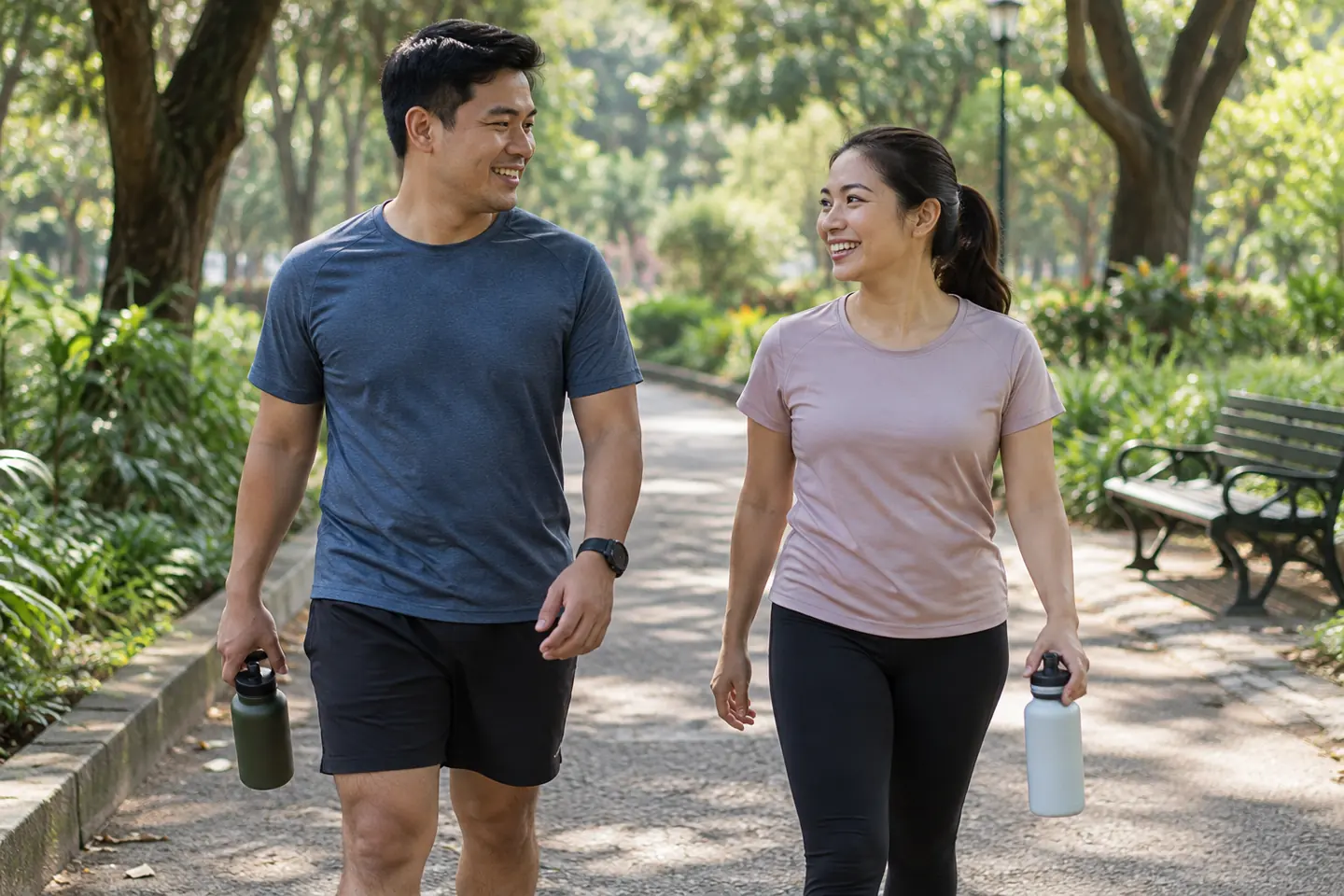
The best active date is an activity both people can comfortably choose, adjust, and stop. For an early meeting in the Philippines, we favour a short public walk, an introductory court session, or another beginner-friendly activity with a seated conversation afterward. Agree on the actual effort involved before the date. “Something active” can mean a gentle half-hour to one person and an intense training session to another.
Our top five formats for 2026 are editorial recommendations chosen for flexibility and room for conversation. They are not a ranking of sports venues or a promise of health benefits. An active date does not need to involve weight loss, a race, a fitness tracker, or proving that you can keep up with someone else.
Choose the effort before choosing the activity
Ask what the other person enjoys and what they would rather avoid. You can discuss time spent standing, access to seating, changing facilities, stairs, noise, and whether an instructor is involved without asking for private medical details. Give an equally welcoming alternative if an activity is not suitable. “We could also just have coffee” should sound like a real option.
For outdoor plans, check current local information near the meeting time. PAGASA’s heat-index page provides changing observations, while its rainfall and thunderstorm warning guidance explains the warning products. We use these official resources as planning checks, not as a forecast for your date. Follow current advisories and venue instructions rather than committing to an outdoor plan because you already suggested it.
1. A short shaded walk with agreed turning points
A walk is our first choice when you want an activity that can leave plenty of space for conversation. Choose a public route you both understand, with a clear meeting point and places to sit. Describe the surface and any stairs or uneven sections you know about rather than simply calling a route easy.
Agree on a turning point before starting. A loop can be convenient, but only if its full length suits both people. An out-and-back route can work when you can turn around earlier. Avoid adding an extra viewpoint or distant food stop without checking; the return journey still counts as part of the activity.
Walk at a pace that lets both people speak comfortably. Ask before changing speed and treat a pause as ordinary. Bring your own water and keep access to your transport plans. If either person wants to finish, head toward the agreed exit rather than negotiating for another kilometre. A short pleasant date is complete even if you both own shoes designed for a much longer run.
2. A beginner court session focused on friendly practice
A casual badminton, tennis, or similar court session can work if both people actually want to play and the facility permits your plan. Check the booking duration, equipment arrangements, footwear requirements, changing facilities, and cancellation terms. Do not assume a public-looking court is available without reservation or that a beginner can borrow everything on arrival.
Frame the first session as practice. You might rally gently, take turns trying a basic skill, or play a short game after both have warmed into the format. If one person has years of experience, avoid turning the date into coaching unless they ask for help. A date is not an invitation to critique every movement.
Use a simple stopping agreement: either person can suggest a break or finish without being teased. Keep scores optional, and do not add romantic stakes. After the court time, sit somewhere nearby and talk about something beyond performance. It is fine if the conclusion is that you enjoyed meeting but prefer a different shared activity next time.
3. An introductory class led by an instructor
A beginner class can provide structure when neither person wants to plan an entire session. Choose a genuine introductory level and tell the organizer you are both new if that is the case. Read the description carefully: a class labelled open to all can still involve effort or skills you do not want on a date.
Ask about equipment, clothing, physical adjustments, and whether observing part of the session is possible. If the activity involves partner work, confirm how pairing happens and whether participants can decline particular exercises. Do not assume a date should accept physical contact because an instructor demonstrates it.
Let the instructor manage technique and safety. Avoid surprising your date by signing them up for an advanced session, a public challenge, or a progress photo. Discuss photography separately, including the organizer’s own photo practices. If the format does not suit either person, you can choose another activity without needing to prove you tried hard enough. An introductory class should support curiosity, not create a performance obligation.
4. A casual bowling or indoor skill session
An indoor activity can suit people who want movement without planning an outdoor route. Bowling, a beginner throwing activity at a staffed venue, or another short skill game may work if the setting is suitable and both people are interested. Check the actual venue’s instructions, age policies, equipment, and supervision rather than treating all indoor games as interchangeable.
Choose one session with a clear duration. Ask about required footwear, shared equipment, lighting, and noise. If a space is busy or has flashing effects, that may matter more than the game itself. A venue photograph rarely tells you enough, so contact staff when a particular need is important.
Keep the tone friendly. Laugh at an unexpected result together without filming someone’s mistake for a social post. Let each person choose whether to use the scoreboard. If one has much more experience, make room for individual enjoyment instead of manufacturing a contest. A seated break afterward lets you find out whether the person liked the activity or simply appreciated spending time with you.
5. A split-interest date with a small active portion
This format is useful when one person enjoys sports and the other is curious but does not want a whole date built around exercise. Agree on a modest active portion followed by an equally important activity chosen by the other person. For example, a short public walk might lead to a bookshop visit or a snack nearby.
Set the two parts before meeting so the second is not a consolation prize after an exhausting first part. Keep travel between them simple, and avoid a plan where stopping early means missing the enjoyable part. Both people should be able to say the active portion is enough without feeling they ruined the date.
Share interest without recruiting a new training partner. Ask what they enjoyed, what they would change, and what they would like to introduce you to next time. You can build a relationship while keeping some hobbies separate. The goal is understanding each other’s preferences, rather than converting the other person to your routine or measuring commitment by participation.
A worked plan for different energy levels
Imagine one adult who runs regularly and another who enjoys short walks. They choose a public shaded route, agree on a limited time rather than a distance target, and identify a nearby place to sit. Each checks the journey to and from the meeting. They look at current weather information before leaving and have an indoor alternative they both want.
An invitation could be: “Would you like a short walk and a drink afterward? We can choose a pace that suits us both and turn back whenever we want. If the weather makes it uncomfortable, let’s use the café plan instead.” That describes the date without promising conditions you cannot control.
On the day, ask once whether the pace feels comfortable, then listen to the answer. If someone wants to stop, make the adjustment pleasantly. Afterward, mention the conversation or a shared observation instead of rating their fitness. If you would like to meet again, propose a plan based on what you learned. The most useful result is a clearer understanding of how you both like spending time together.
Related reading
For route details, read planning a walking date. Discuss different preferences with dating someone with different hobbies and prepare an alternative with rainy-day date ideas.
Source note: PAGASA’s heat-index and warning-system pages are undated resources checked on 7 November 2026. Their information changes; recheck current conditions for the date itself. The activity choices, example, and suggested conversations are our own planning guidance.